

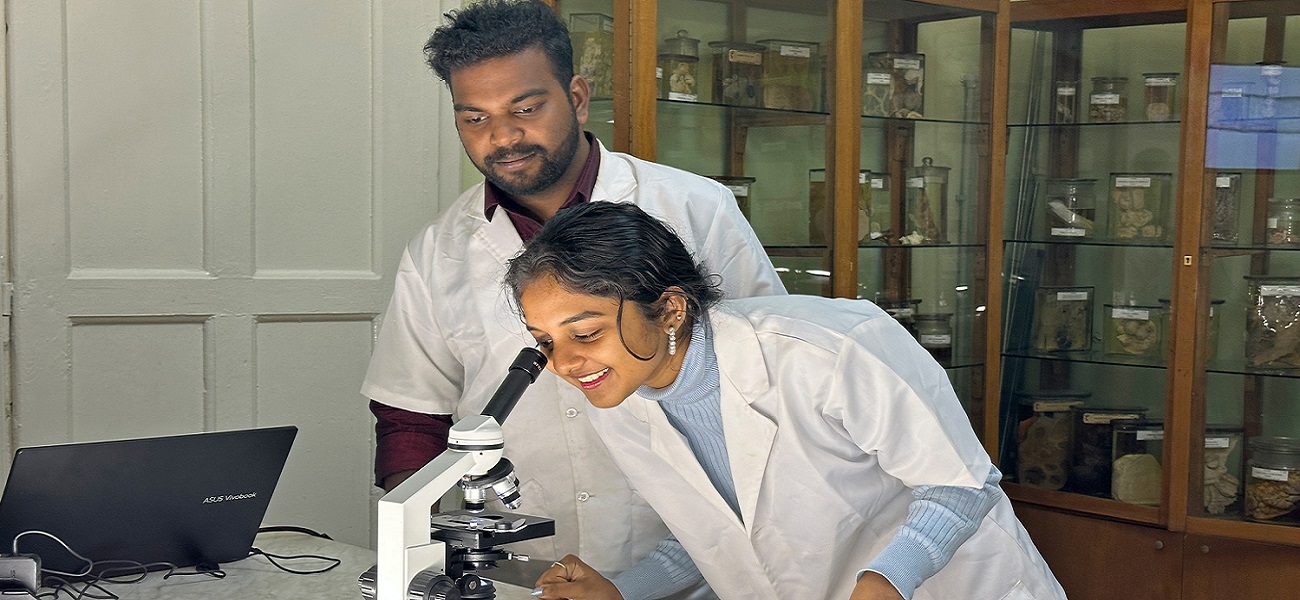



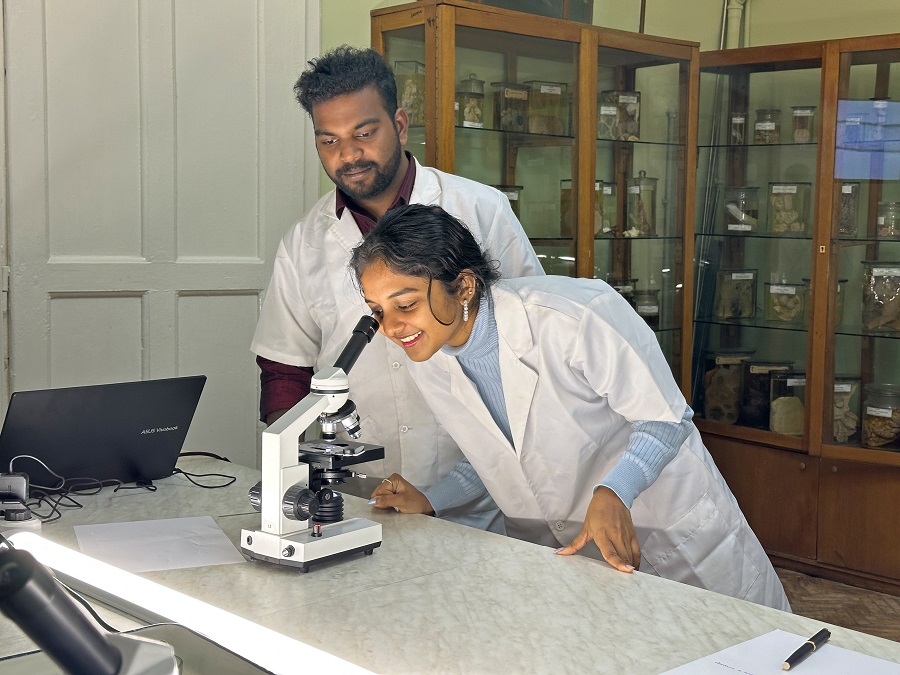
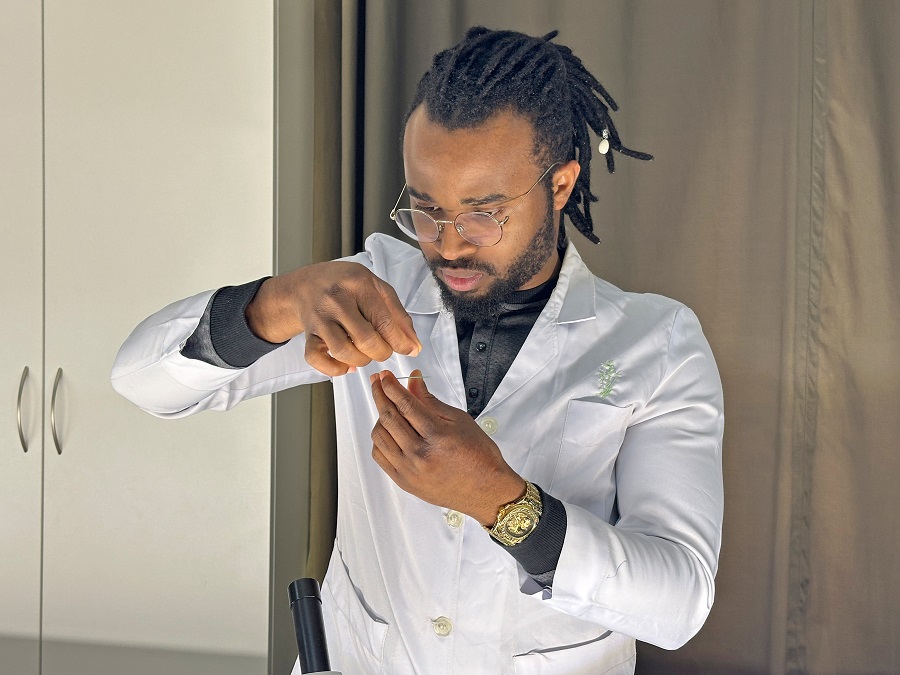
During a laboratory session for master's students in the specialty H6 "Veterinary Medicine" within the course "Forensic Veterinary Medicine", associate professor, veterinary surgeon Volodymyr Lemishevsky, presented the methodology for determining the taxonomic origin of animal hair.
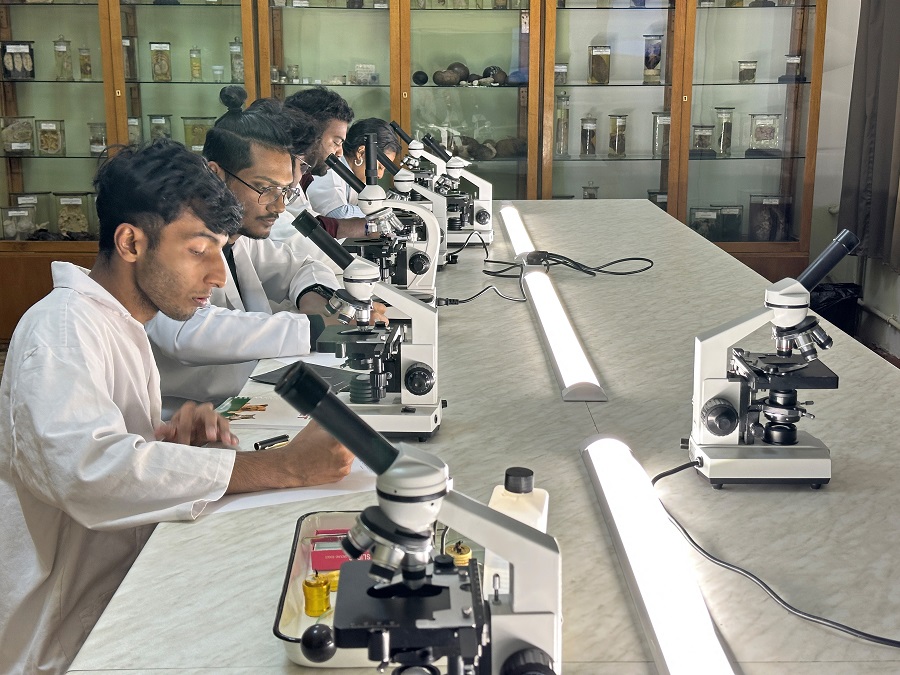
Archived hair samples from various animal species were analyzed using macroscopic and microscopic methods. Linear measurements were made using a ruler and calipers, and hair thickness was estimated using specialized software in combination with a light microscope equipped with a digital camera. Alkaline hydrolysis was performed with a 20% sodium hydroxide solution, and cuticle impressions were prepared using "BF-6" glue, which ensured high quality samples for further analysis.
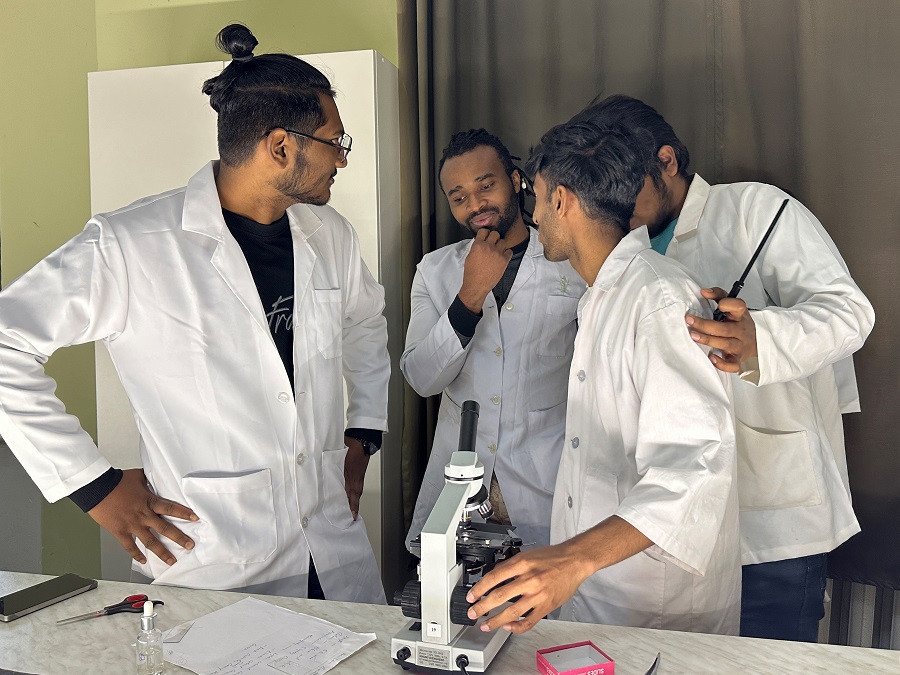
The study was conducted in two stages:
Stage 1: Macroscopic analysis.
Students recorded the morphological characteristics of the hair samples, including:
Length, thickness, and general shape (straight, curved, or spiral).
Surface texture (smooth, scaly or ridged).
Hair type (topcoat, undercoat or intermediate).
Cross-sectional shape (round, oval or triangular).
Root structure, focusing on follicle morphology.
Stage 2: Microscopic analysis.
The analysis focused on the following characteristics:
Presence and distribution of pigment in the middle of the hair shaft.
Medullary layer: presence or absence, structural features.
Cuticle scale pattern (arrangement classified as annular, serrated or mosaic).
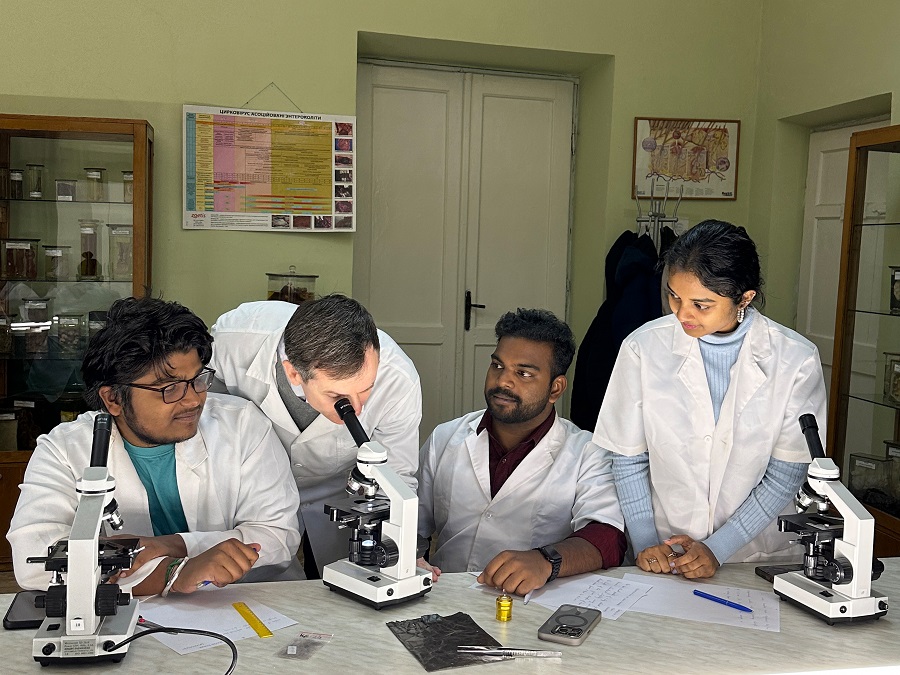
This laboratory session was a significant step in the understanding of forensic veterinary medicine students. The practical approach combined with the overview demonstration of the results illustrated the effective integration of modern and traditional methodologies into the learning process.
Author of the publication Volodymyr LEMISHEVSKY, Candidate of Veterinary Sciences, Associate Professor of the Department of Normal and Pathological Morphology and Forensic Veterinary Medicine