



- Hits: 16
Enhancing Capacity of Universities to Initiate and to Participate in Clusters Development on Innovation and Sustainability Principles

UniClaD (number 609944-EPP-1-2019-1-LT-EPPKA2-CBHE-JP) is an international project of the European Union's Erasmus+ program (higher education capacity development module), which lasted from January 2020 to January 2023. Its goal is to strengthen the role of universities as drivers of agro-industrial and regional clusters on the basis of innovation and sustainable development.
Basic information about the project
Full title: Increasing the capacity of universities to initiate and participate in the development of clusters on the principles of innovation and sustainability.
Acronym: UniClaD Grant number: 609944-EPP-1-2019-1-LT-EPPKA2-CBHE-JP
Implementation period: 15.01.2020 - 14.01.2023
Key program: Erasmus+ Capacity Building in Higher Education (CBHE)
Main tasks Development of the potential of universities in the creation and support of agro-industrial and tourism and recreation clusters. Formation of specialized innovation and expert centers based on universities. Establish close cooperation along the chain "education - science - business - local authorities". Improving the practical training of students and researchers for real needs of the economy.
- Hits: 38
- Enhancing Capacity of Universities to Initiate and to Participate in Clusters Development on Innovation and Sustainability Principles
- Erasmus+ KA2 101083143 DEFEP "Distance Education for Future: best EU practices in response to the requests of modern higher education seekers and labor market"

- Innovative Master Courses Supporting the Improvement of the Energy and Carbon Footprint of the Ukrainian Building Stock (UKRENERGY)

- Improving skills in laboratory practice for agro-food specialists in Eastern Europe
- Sustainable Livestock Production and Animal Welfare (SULAWE)
- Hits: 16
International educational project “Building Back Better Through Social Entrepreneurship” within the framework of the EU4Youth project, initiated by Junior Achievement Ukraine

Duration of the project – from September 2023 to July 2025
Grant amount – 2000 euros
Contacts: +38(096) 740-48-01 (coordinator – Halyna Volodymyrivna Skhidnytska)
You can find us on Instagram by calling: https://www.instagram.com/craft_pastries_/?igsh=OTk3MG9kanh0dXVr#
The “Finika” team of the Lviv National University of Environmental Management includes:
1. Halyna Volodymyrivna Skhidnytska, Ph.D., Associate Professor, Associate Professor of the Department of Finance, Banking and Insurance (coordinator, mentor);
2. Andriy Volodymyrovych Kolodiy, Candidate of Economic Sciences, Associate Professor, Associate Professor of the Department of Finance, Banking and Insurance (mentor);
3. Galyna Vasylivna Markiv, Candidate of Economic Sciences, Associate Professor, Associate Professor of the Department of Finance, Banking and Insurance (mentor);
4. Anastasia Anatoliivna Ruska, student of the Fin-31 group, specialty 072 “Finance, Banking and Insurance”;
5. Alina Mykhailivna Rykhlevych, student of the Op-21 group, specialty 071 “Accounting and Taxation”;
6. Oksana Denisivna Kreminska, student of the Fin-22 group, specialty 072 “Finance, Banking, Insurance and Stock Market”;
7. Sofia Sergiivna Malkovska, student of the Fin-22 group, specialty 072 “Finance, Banking, Insurance and Stock Market”.
Currently, the team's higher education applicants are conducting entrepreneurial activities in the form of an individual entrepreneur "Ruska Anastasia Anatoliivna"
- Hits: 16
The international infrastructure project "Establishment of a Veterinary School of Advanced Diagnostic Methods with the establishment of specialized laboratories" (code IPBU.03.01.00-06-755/11-00) aimed to modernize veterinary medicine in border regions.

Geography and project participants
The project was funded by the European Union through the Poland-Belarus-Ukraine Cross-Border Cooperation Programme 2007–2013. Main recipient (Ukraine): Faculty of Veterinary Medicine, S.Z. Grzycki Lviv National University of Veterinary Medicine and Biotechnology.
EU partners: leading veterinary and scientific centers of the Lublin and Podlaskie Voivodeships (Poland).
Specialized laboratories and equipment To expand diagnostic capabilities, the university in Lviv was equipped with advanced European equipment:
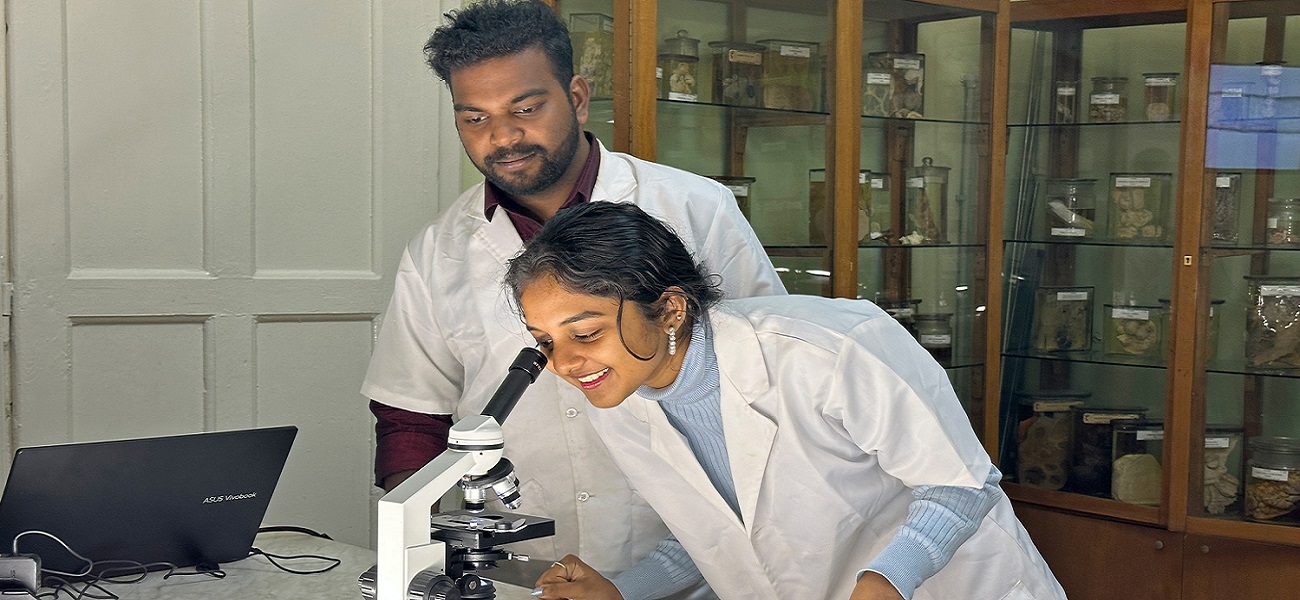
Clinical Diagnostics Laboratory: Received high-resolution Leica DM2500 digital microscopes with cooled DFC450C cameras for accurate histological and cytological studies.
Biochemistry and Express Analysis Laboratory: Automatic blood and urine analyzers were installed for instant assessment of patients' condition.School of Visual Diagnostics: As part of the initiative, ultrasound and radiography rooms were modernized, which later formed the School of Visual Diagnostics at the university.
Mobile HospitalA unique element of the project was the creation of the first veterinary ambulance in the region:
The vehicle is equipped with portable ultrasound machines, ventilators, electrocardiographs and surgical kits.
The mobile complex allows for resuscitation, complex diagnostic procedures and surgical interventions directly on trips to farms or private clients.
Educational and practical resultsThe basis for the project results was the educational and production clinical "VetCenter" of the University of Lviv National University of Veterinary Medicine.
European standards: Students received access to practical training on equipment used by clinics in Western Europe.
Advanced training: Certified courses for practicing veterinarians from all over Ukraine began to be held on the basis of the Veterinary School.
International research: New laboratories allowed Ukrainian scientists to integrate into joint EU research programs and monitor cross-border animal infections.
The total budget of the international project was 735,918 euros.
The financial structure and distribution of funds were as follows:
The grant from the European Union: amounted to 1 480 459,46 euros (90% of the total budget of the program), which were allocated through the Cross-Border Cooperation Program Poland - Belarus - Ukraine 2007-2013.
Own contribution (co-financing): amounted to 73,592 euros (10% of the amount), which were jointly provided by the S.Z. Grzytsky Lviv National University of Veterinary Medicine and Biotechnology and Polish partners.
- Hits: 16
ZeroHeracleum
Protecting the biodiversity of cross-border territories of Ukraine and Poland from invasive hogweed (Heracleum) populations

priority
Environment
specific objective
1.3 Enhancing protection and preservation of nature, biodiversity and green infrastructure, including in urban areas, and reducing all forms of pollution
Lead partner
Lviv Agrarian Chamber (Lviv Oblast, Ukraine)
Partners
Maria Curie-Skłodowska University in Lublin (Lubelskie Voivodeship, Poland),
Stepan Gzhytskyi National University of Veterinary Medicine and Biotechnologies Lviv (Lviv Oblast, Ukraine),
University of Life Sciences in Lublin (Lubelskie Voivodeship, Poland),
Lublin Chamber of Agriculture (Lubelskie Voivodeship, Poland)
Duration
24 months
01.06.2025 - 31.05.2027
Estimated project cost:
Total project budget: 1,676,036.47 euros, including: EU grant – 1,508,432.82 euros, Partners’ contributions – 167,603.65 euros.
Total project budget for Ukraine: 889,463.87 euros, of which: EU grant for Ukraine – 800,517.48 euros; Ukrainian partners’ contributions – 88,946.39 euros.
The rapid spread of invasive plant species is causing enormous damage to biodiversity and the environment. Invasive plants displace native species, creating monocultures and simplifying wildlife habitats. In Ukraine and Poland, more than 80 plant species cause damage to agriculture and forestry.
The objectives of the project are to assess the occurrence and diversity, as well as to control and monitor invasive populations of Sosnovsky hogweed on the Polish-Ukrainian border. The project covers the Lviv Oblast in Ukraine and Lubelskie, Podlaskie and Podkarpackie voivodeships in Poland.
Effective measures to combat invasive hogweed will be tested and applied. These are intended to prevent the spread of this plant and help restore natural diversity. So far, there is no detailed information on the spatial distribution of hogweed and its impact on nature. Through various remote sensing survey methods (satellite and aerial), project partners expand their knowledge on this subject. Thanks to WebMap technology for sharing results, open access to knowledge on biodiversity and invasive alien species will be provided. Information on known hogweed locations will be gathered from local communities via the WebGIS application. An analysis of satellite images will be carried out to identify new locations of the dangerous hogweed species. Computer equipment will be purchased to enable the analysis. A promotional and information campaign (video and paper materials, training for all age groups) will spread awareness of the problem in local communities.
The joint, cross-border approach to the conservation of biodiversity against an invasive species will ensure an exchange of experience and cooperation between project partners. It will enable a comprehensive assessment of the status of hogweed populations and the testing of control methods on a larger scale. It will make it possible to monitor and limit the dispersal routes of the species under study. The areas where the project will be implemented are connected by the border river Bug, which is a site of hogweed propagation. By eliminating the threat of invasive plants, the quality of life for residents and the environment will be improved.
Website: https://pl-ua.eu/en/projekty-i-historie/zeroheracleum/