


- Hits: 65
Two Histories – One Powerful University
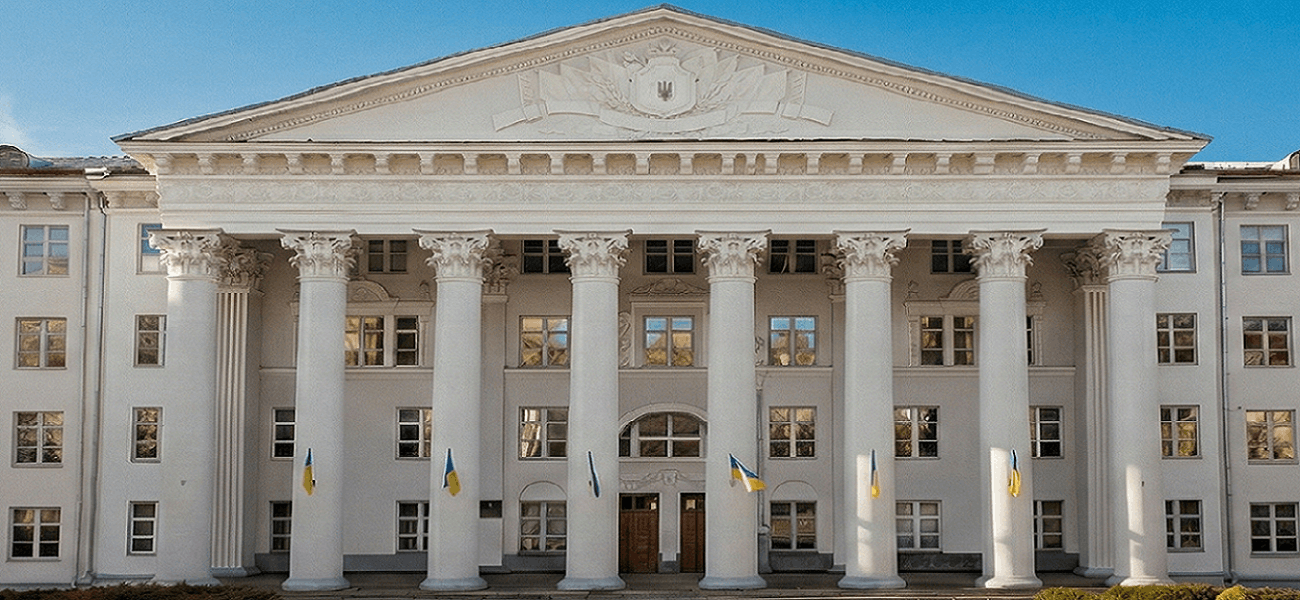
T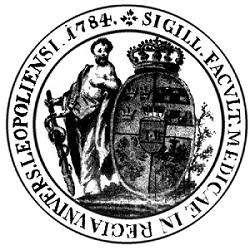 he history of great achievements begins with ideas that are ahead of their time. This is how two powerful educational traditions were born in Lviv and Dubliany more than two centuries ago, which in 2024 were united into a single modern university space.
One of them originated in Lviv in 1784, when veterinary education was initiated with the creation of a specialized department. In 1881, by decree of Emperor Franz Joseph I, the Veterinary School was established, which in 1897 was granted the status of an academy. For many generations, scientific schools known far beyond Ukraine's borders have been formed here. Even in the most difficult periods of the 20th century, the institution maintained its scientific potential thanks to the dedication of teachers and scientists. A special place among them is held by the outstanding scientist Stepan Gżyckyi, whose name the university proudly bears today.
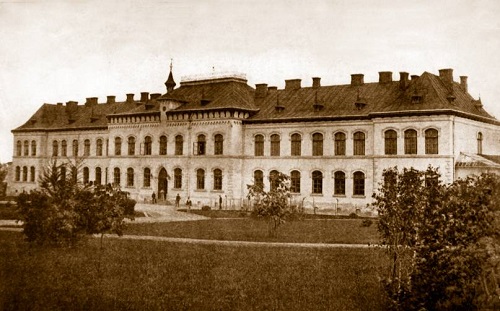 The second educational tradition was formed in Dublyany, where on January 9, 1856, under the patronage of the Galician Economic Society, the Agricultural School was opened. Later, it became the Higher Agricultural Academy, known throughout Europe, and became one of the centers for the development of agricultural science and environmental management. Throughout its history, the institution was not only an educational and scientific center, but also an important center of national life and patriotic education. During the years of the liberation struggle, future figures of Ukrainian statehood were studied and formed here. Both educational traditions went through wars, political transformations, and historical trials, preserving the most important thing - devotion to science, education, and Ukraine. The Veterinary School became one of the leading centers of veterinary medicine and biotechnology in Eastern Europe, and the Higher Agricultural Academy was later transformed into the Lviv National University of Environmental Management - a powerful center of agricultural education and engineering science.
In September 2024, the Lviv National University of Environmental Management was merged with the Stepan Gzhytskyi National University of Veterinary Medicine and Biotechnologies Lviv. The merger of the two educational and scientific schools enabled the integration of many years of experience, scientific potential, and a wide range of training areas into a single university. Thus, the many years of development of two separate educational traditions came to an end, and a new page in the history of a single university began.
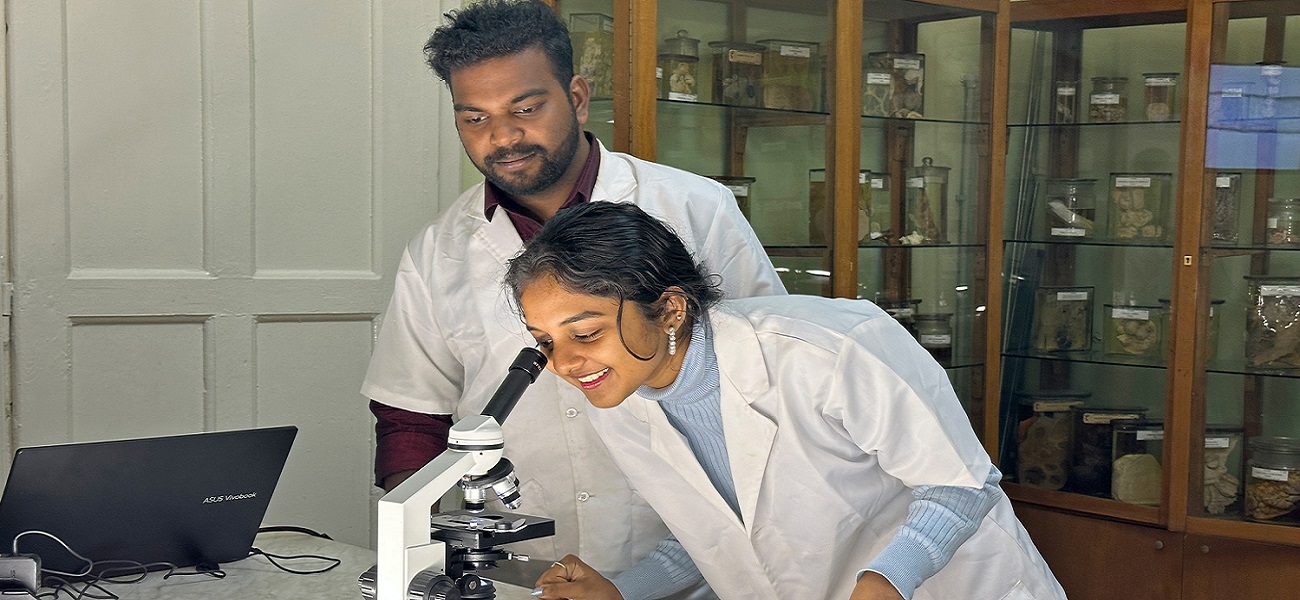
Today, the university is a unique educational and scientific complex that combines centuries-old traditions in veterinary medicine, biotechnology, agricultural science, environmental management, and engineering with modern management. Future veterinarians, biotechnologists, agricultural engineers, ecologists, IT specialists, lawyers, managers, and tourism industry specialists study here.
The university infrastructure includes modern laboratories, veterinary clinics, educational buildings, museums, dormitories, sports facilities, and innovative scientific centers. Thanks to cooperation with partners in the European Union, the USA, and Canada, students have the opportunity to undertake international internships, work with the latest equipment, and gain practical experience in accordance with global standards.
Two histories. Two educational traditions. One university that has combined centuries-old experience, scientific achievements, and a desire for development. Today, the university confidently looks to the future, forming a new generation of highly qualified specialists who will build Ukraine with their work, knowledge, and responsibility.
- Hits: 67
PARUBCHAK Ivan – Rector
DVYLYUK Ihor – First Vice-Rector
FEDETS Oleh – Vice-Rector for Scientific Work
MYKULA Oleh – Vice-Rector for Scientific, Pedagogical Work and Quality of Education
PODOLIAK Mykhailo – Vice-Rector for Scientific, Pedagogical Work and International Cooperation
GULA Ruslan – Vice-Rector for Socio-Economic Development and Innovations
DRUZYUK Vasyl – Vice-Rector for Administrative and Economic Work
PUNDYAK Taras – Dean of the Faculty of Veterinary Medicine
BOYKO Andriy – Dean of the Faculty of Biological and Technological Sciences
KOVAL Halyna – Dean of the Faculty of Food Technologies and Biotechnology
BEREZIVSKYI Yaroslav – Dean of the Faculty of Management, Business and Public Administration
SEMENIV Bohdan – Dean of the Faculty of Public Health and Social Welfare
SHUVAR Ivan – Dean of the Faculty of Agrotechnology and Environmental Protection
OSADCHUK Taras – Dean of the Faculty of Construction and Architecture
KOLODIY Pavlo – Dean of the Faculty of Land Management and Infrastructure Development
KOVALYSHYN Stepan – Dean of the Faculty of Mechanics, Energy and Information Technologies
KOVALIV Volodymyr – Dean of the Faculty of Management, Economics and Law
DEMKIV Maryana – Chief Accountant
BALUKH Roman – Head of the Human Resources Department
STOYKO Natalia – Academic Secretary
KUPCHAK Tetyana – Head of the Social and Cultural Development Department
PENTSAK Taras – Head of the Educational and Methodological Department
GASHCHUK Yevhen - Director of the Student Campus
- Hits: 21
Qualifications Framework in Environmental Sciences for Ukrainian Universities
Number: 544524-2013-PL-SMHES
Acronym: QANTUS
Website: http://qantus.osenu.org.ua/
List of participants:
Bila Tserkva National Agrarian University
Institute of Ecology of the Carpathians, National Academy of Sciences of Ukraine
Institute of Innovative Technologies and Educational Content, Ministry of Education and Science of Ukraine
Lviv National Agrarian University
National University "Odessa Maritime Academy"
National University of Life Resources and Environmental Management of Ukraine
Odessa State Ecological University
Uman National University of Horticulture
V. N. Karazin Kharkiv National University
- Hits: 20
Project «Environmental curricula at agricultural universities»
Multy-Country Joint Project «Environmental curricula at agricultural universities» (ENAGRA)
159188-TEMPUS-1-2009-1-PL-TEMPUS-JPCR
Project goals and objectives:
To bring three cycle structure curricula and teaching methods at Project partner universities, in the priority discipline of environment, into line with the Bologna requirements by June 2011.
Activities:
- Elaboration of target curricula
- Development of courses
- Development of distance and e-learning methodology
- Pilot study programs implemented
- Study programs evaluation and upgrading
- Dissemination within/beyond consortium
- Introduction of modernized study programs
- Evaluation of modernized study program curricula
Expected results:
- Proposed ENAGRA Project aims at modernization of curricula at four Partner agricultural Universities in Russian Federation and in Ukraine. Project results will lead to harmonization of Russian and Ukrainian higher education system with European one and they will directly support implementation of Bologna process in Project Partner Countries.
- The planned to be modernized three cycle structural curricula in the area of environmental studied will consist of the 4 years Bachelor program followed by 2 years Master program and 3 years PhD study. Specialty for development/modernization: “Ecology and Environmental Protection” was selected for Ukrainian Partners.
- The structure of modernized study program will be based on EU standards. Study program will consist of compulsory subjects, restricted optional subjects and fully optional subjects.
- The teaching methodology will combine lectures, practical exercises or experiments, case works, team projects, modelling field trips, internships and thesis research. Partner University staff will be trained on new, advanced study subjects and new teaching methods. Educational computer and environmental quality laboratories will be developed/upgraded and library resources will be updated.
Duration: 15.01.2010 - 14.01.2013
- Hits: 19
Development of New Land Governance Studies in Macedonia and Ukraine (“LAGOS”) 159184-2009-TEMPUS-SE-JPCR
The main project objective is to develop and introduce new Master curriculum in land governance in accordance with the Bologna process (i.e. a two-year study program, ECTS including ECTS grading system) at two Macedonian and four Ukrainian universities. The project will establish the new study program through a new innovative (i.e. interdisciplinary) Master curriculum. Since two different countries are involved, two mainly similar but partly individual curricula are to be developed.
Project duration – 3 years (15 January 2010 – 15 January 2013).
Objectives of the project:
To develop and introduce a new Master program in Land governance in accordance with Bologna process at partner Universities;
To establish new IT academic environment at partner Universities;
To built up the capacity of partner Universities through intensive training;
To strengthen the link between education and practice in Land governance;
To enhance the visibility of the new Master program in Macedonia and Ukraine.
Project’s activities:
Analyze existing curricula in Land Governance and compare with needs of market;
Develop new Master curriculum, courses and teaching materials in Land Governance;
Retrain teachers and train students of partner Universities;
Introduce a new teaching methodologies;
Info-sessions at partner Universities;
Dissemination of the project results;
Sustainability;
Quality control and monitoring;
Management of the project.
Consortium
Partners from EU countries:
Grant holder KTH, Royal Institute of Technology, Sweden (www.kth.se)
Helsinki University of Technology, Finland (www.tkk.fi)
University of Agriculture in Krakow, Poland (www.ur.krakow.pl)
Partners from Republic of Macedonia:
Sts. Cyril and Methodius University, Republic of Macedonia (www.ukim.edu.mk)
Goce Dolcev University, Republic of Macedonia (www.ugd.edu.mk)
Partners from Ukraine:
Kiev National University of Construction and Architecture (www.knuba.edu.ua)
Donetsk National Technical University (www.donntu.edu.ua)
Kharkiv National Agrarian University (www.knau.kharkov.ua)
Lviv National Agrarian University (www.lnau.lviv.ua)
In Kyiv National University of Construction and Architecture (KNUCA) and Donetsk National Technical University (DNTU) will develop and introduce curriculum with urban profile. In Kharkiv National Agrarian University named after V.V. Dokuchaev (KNAU) and Lviv National Agricultural University (LNAU) will prepare new curriculum with rural profile.